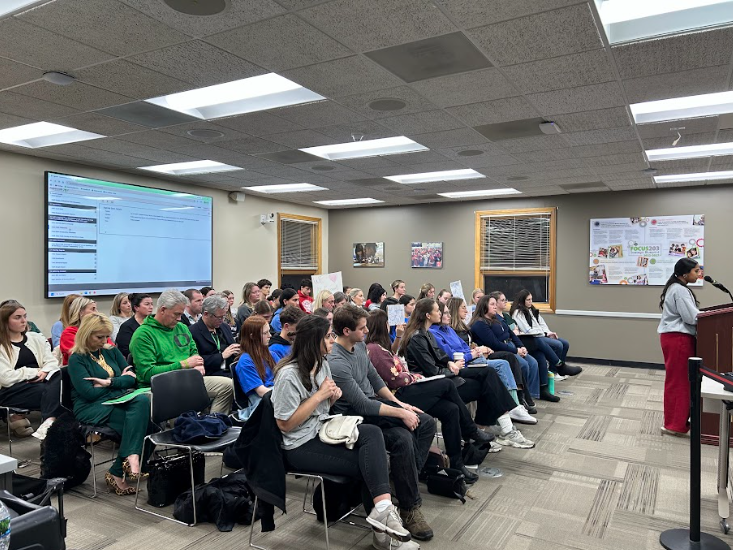
There are moments in a community that feel like a sudden jolt, the kind that makes you wonder how long you had been dormant. Monday night was one of them. People lined up outside the District 203 administration building, clutching speeches and anxieties, fighting for teachers, coworkers, and friends who had shaped the Naperville community, their teams, and their lives. It was emotional, urgent, and powerful–and it was also late.
The district has been warning about declining enrollment and structural deficits for years, yet most of us only tuned in when the consequences finally had names. When the board prepared to vote on cutting 38 educators, the community stirred. But by then, the damage was already unfolding.
District 203’s financial reality is not new. A projected $12.4 million deficit, years of budgets that exceeded revenue, and enrollment declines dating back to 2015 all led to this moment. The board framed the RIF as a necessary adjustment, a response to numbers on a spreadsheet. But to the people who filled that room, those numbers were mentors, coaches, and teachers who made school feel like a place worth showing up to. Senior Karina Bassi came because her math teacher, who she said was the best teacher she’s ever had, was on the list. Matthew Smith, a parent with four children in the district, explained why teachers are so important.
“Some teachers are the most critical part of the schools…[they’re] not an easy thing to replace,” he said.
When a district is willing to lose educators like that, it’s hard not to wonder whether leadership still understands what the community values.
Some might argue that the board did nothing wrong, that the information was public, the documents were posted, and the meetings were open. Technically, that’s true. But transparency isn’t the same as connection. Posting a 200-page budget packet online doesn’t mean families understand it. Holding a meeting doesn’t mean people feel invited. And insisting “nothing has been hidden” doesn’t change the fact that many parents only learned about the meeting the morning it happened. Smith expands on that.
“I don’t think it’s been handled well,” he said.
And he’s right. If leadership truly understood the community it serves, it would have known that cutting dozens of teachers would never be seen as a simple budget fix. They would have known that people don’t measure a district’s success in dollars saved, but in relationships preserved.
The board’s disconnect was obvious Monday night, but so was ours. Many speakers admitted they hadn’t been following the district’s financial discussions until the RIF list was published. Bassi herself said she “didn’t really know this was going on until about a week ago.” Simon Reckamp, a student-athlete fighting for his coach, said his entire team was blindsided. Will DeBolt, a Naperville North teacher and coach who was on the list, expanded on the district’s message when considering this decision.
“We [teachers] are numbers. We are not humans,” he said.
These are not the words of a community that feels informed. They are the words of a community that came alive when the consequences became personal.
And now, even with the RIF defeated, the deficit remains. The district still needs millions in cuts. The board will revisit the budget in May. Parents at Mill Street Elementary are already bracing for their third principal in four years. Ritu Wilson, a teacher in Naperville North’s math department, described the process as “gut-wrenching.” Julianne Fox, a parent in the district, watched a 19-year veteran put on the list and possibly pulled from teaching the Project Idea (PI) Plus program because she was the last one hired. These are not signs of a system making thoughtful, long-term decisions. They are signs of a district scrambling–and a community reacting instead of participating.
District 203 needs clearer communication. The board needs to rebuild trust by aligning its decisions with the values of the people it represents. And the community needs to stay vigilant, not just when teachers are at risk, but long before. Monday night showed what happens when people finally pay attention. Imagine what could happen if we didn’t wait until the last minute, when the stakes get too high.