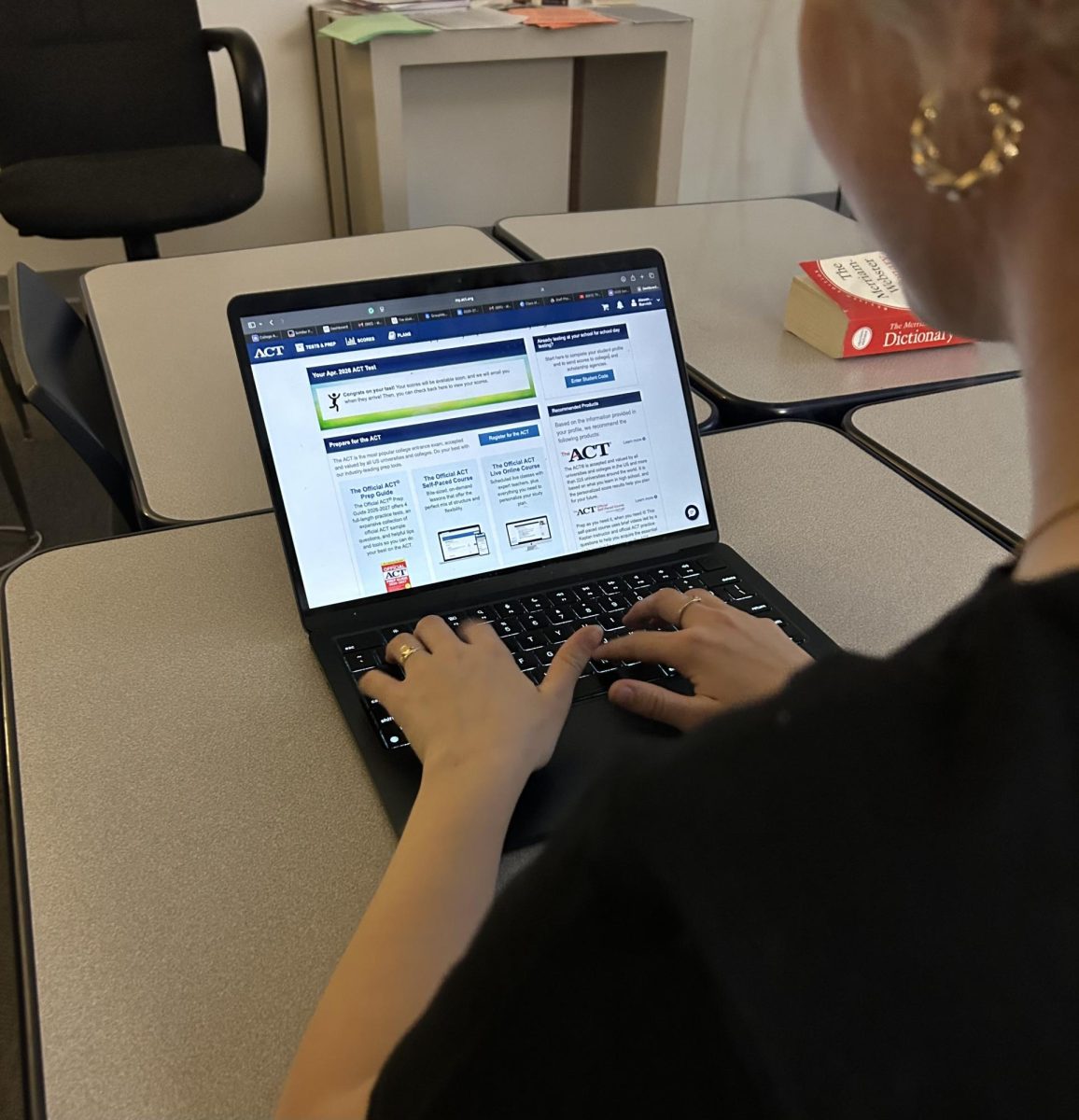
Every fall, seniors all over the country enter a psychological state known as Early Decision season; with it comes hope, fear, and the delusion that a 15% acceptance rate is actually “pretty good.” One application, one click, one agreement, and suddenly, a 17-year-old is now ready to commit $80,000 a year to a school they might have visited one time on a cloudy day.
Early Decision is a system that turns the already messy college process into one that resembles the Hunger Games, but instead of fighting for survival, we’re fighting for the privilege of (maybe) going broke.
For those unfamiliar with this option, Early Decision (ED) is an admissions option where you apply early and, if accepted, are legally bound to attend. You cannot compare financial aid offers or weigh other schools, as you signed a contract committing to that school. There is no time to think, breathe or question why you’re making one of the biggest decisions of your life on a random day before, or even on, November 1st. Meanwhile, colleges and universities get exactly what they want: guaranteed tuition, sky-high “yield rates” and the ability to brag about their “selectivity.” It’s a win-win for them. For us? It’s more like a sign-your-life-away-and-hope-for-the-best kind of situation.
Let’s be honest here: ED forces students to make a choice they’re not equipped with the knowledge to make. We are, after all, the same people who lose water bottles weekly and still forget our IDs at home. But schools expect us to be ready to commit thousands of dollars before we’ve even taken our last AP tests and finals. It’s not just unfair, it’s unrealistic.
Some may try to claim it’s harmless as it “reduces stress’ and “shows commitment,” as if we seniors needed more to add to our never-ending stress buffet. And sure, ED can reduce stress, but only for students whose families can comfortably afford whatever tuition bill the school hands them. For everyone else, however, it’s a financial blindfold. You sign first, then you find out how much you owe for four years.
After ED, students who apply regularly and early now have to compete for fewer spots at their dream school. The system practically begs wealthier students to apply with an early, binding agreement while pushing everyone else toward the lottery of the later rounds. It’s their strategy. They know exactly what they’re doing. More schools now fill half to three-quarters of their freshman class through ED. Even public universities have joined. Aren’t they supposed to be the “accessible” option? Now, they’re turning our future into a business transaction. Students now question whether signing a legally binding contract was ever a sane idea.
At the end of the day, seniors shouldn’t have to be amateur statisticians or legal experts to make this decision. It’s time for colleges and lawmakers to realize that EDs are a barrier, not just a cute tradition. Until it changes, the rest of us will keep trying to navigate a process that seems determined to confuse us, stress us, and drain our bank accounts before most of our eighteenth birthdays.